
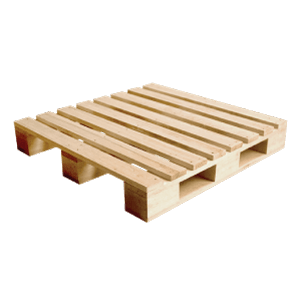


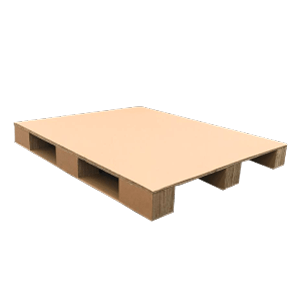

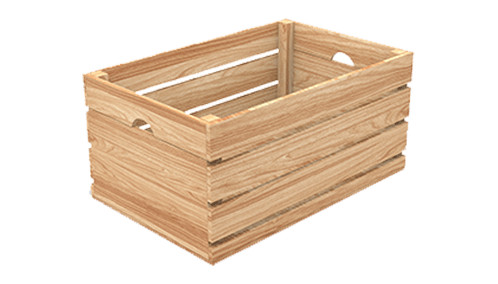
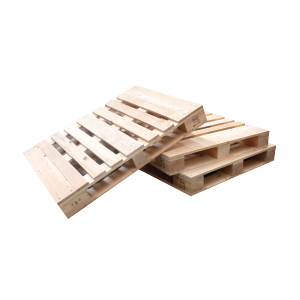

Wooden Pallet Supplier – Cracked pallets are a common problem in logistics and warehousing operations, especially with intensive industrial use. This condition not only reduces pallet quality but can also risk causing product damage and distribution disruptions.
In many cases, even pallets that look strong can develop cracks during use. Therefore, it is important to understand the main causes of cracked pallets so that proper and efficient preventive measures can be taken.
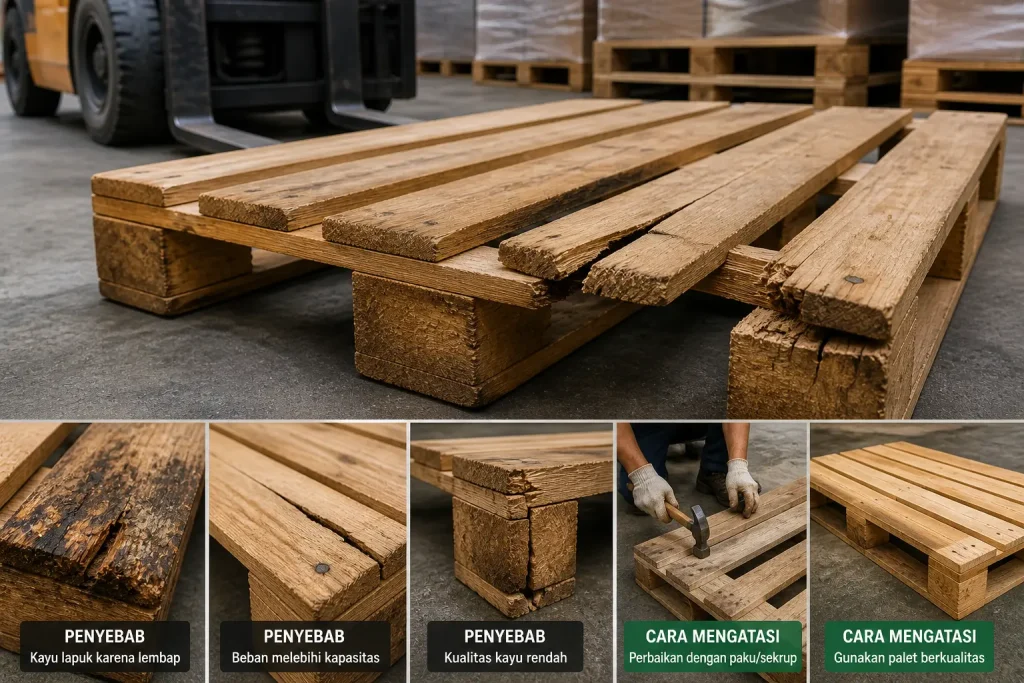
Main Causes of Pallets Cracking During Use
The problem of cracked pallets is usually not caused by just one factor, but by a combination of materials, design, and usage conditions. Each of these elements plays an important role in determining the strength and durability of wooden pallets.
By understanding the causes as a whole, companies can reduce the risk of damage and improve operational efficiency. Here are some of the main factors that often cause pallets to crack in industrial settings.
Wood Quality That Does Not Meet Standards
The wood used to make pallets greatly determines the overall structural strength. If the wood has many defects such as large knots or uneven grain, the risk of cracked pallets will be much higher during use.
In addition, using low-quality wood from an unstandardized supplier is also a common cause. Therefore, it is important to choose a wooden pallet supplier that ensures the quality of raw materials before production.
Unstable Wood Moisture Content
Moisture content in wood greatly affects pallet durability. Wood that is too wet will shrink as it dries, while wood that is too dry tends to become brittle and crack easily when subjected to loads.
Processes such as Kiln Dry (KD) help stabilize moisture content so that the risk of cracked pallets can be minimized. Without this process, pallets are more likely to experience damage within a short period.
Load Exceeding Pallet Capacity
Each pallet is designed to support a certain load. If it is used beyond its capacity, excessive pressure can cause the wooden structure to fail to support the load and eventually crack.
In industrial operations, incorrect load placement is often a major cause of cracked pallets. Therefore, it is important to understand the specifications and maximum load limits of the pallets.
Pallet Design Not Suitable for the Requirements
A pallet design that is not suitable for the type of goods can cause the load to be distributed unevenly. This causes certain points to receive greater pressure and increases the risk of cracking.
Choosing the right design, both in terms of size and structure, is very important to prevent cracked pallet problems. Custom pallets are often a solution for specific industrial needs.
Failure Analysis to Address Cracked Pallets
A failure analysis approach helps companies understand the main causes of cracked pallets more systematically. Through this analysis, damage is not only repaired but also prevented from happening again.
Through proper evaluation, companies can identify weak points in the material, design, or usage. This is very important for improving pallet quality in the long term.
Analyzing the Cracked Areas
The location of cracks on a pallet can provide important clues about the cause of the damage. Cracks in the middle are usually related to excessive loads, while cracks at joints indicate construction issues.
By understanding these patterns, companies can determine more suitable solutions. Analyzing the cracked areas is the first step in effectively addressing cracked pallet problems.
Evaluating Usage Conditions
Usage conditions such as frequency of use, type of load, and handling methods also affect pallet durability. Improper forklift use can accelerate cracking.
Extreme working environments, such as high humidity, can also accelerate damage. Therefore, evaluating operating conditions is very important in preventing cracked pallets.
Impact of Cracked Pallets on Industrial Operations
The problem of cracked pallets affects not only pallet quality but also the entire logistics system. Small damage can develop into a major problem if not addressed immediately.
In the long term, this can increase operational costs and reduce distribution efficiency. Therefore, quick and proper handling is essential.
Risk of Product Damage
Cracked pallets cannot support loads stably, increasing the risk of goods falling or becoming damaged. This is especially costly for high-value products.
In addition, product damage can also affect a company’s reputation. Therefore, maintaining pallet condition is very important to avoid these negative impacts.
Operational Disruptions and Additional Costs
Cracked pallets can cause downtime in the distribution process because they need to be replaced or repaired. This can certainly disrupt smooth operations.
In addition, the cost of replacing damaged pallets can increase if the problem is not addressed immediately. With proper management, this risk can be minimized.
How to Prevent Cracked Pallets in Industry
Prevention is the best step to avoid cracked pallet problems in industrial operations. With the right strategy, companies can significantly extend pallet service life.
These preventive measures not only reduce damage but also improve efficiency and safety in goods distribution.
Use a Quality Wooden Pallet Supplier
Choosing the right supplier is the first step in preventing cracked pallets. A professional supplier will ensure that material quality and production processes meet standards.
In addition, experienced suppliers are usually able to provide specification recommendations that suit industrial needs, helping minimize the risk of cracked pallets.
Use HT and Kiln Dry Treatment
Heat Treatment (HT) and Kiln Dry (KD) processes are very important for maintaining wood quality. These treatments help reduce moisture content and improve resistance to environmental changes.
By using pallets that have undergone these processes, the risk of cracked pallets can be significantly reduced, especially for long-term use and export.
Pay Attention to Storage and Usage
Improper storage, such as in damp areas or directly on the floor, can accelerate pallet damage. Therefore, it is important to keep the environment dry and ensure good air circulation.
In addition, using pallets according to their capacity and proper procedures is also very important. In this way, the risk of cracked pallets can be minimized as much as possible.
Cracked Pallet Solutions for Your Industrial Operations
The problem of cracked pallets should not be taken lightly because it can directly affect distribution efficiency and product safety. If left unchecked, minor damage can develop into major losses in industrial operations.
To avoid these risks, you need wooden pallet solutions designed with high-quality standards and suited to your specific industrial needs. This is where choosing the right supplier becomes very important.
Use Quality Pallets from BMR Pallets
BMR Pallets is a trusted wooden pallet supplier that provides custom pallets according to your industrial needs. Each pallet is produced using selected materials with strict quality control to minimize the risk of cracked pallets during use.
We also use Kiln Dry (KD) and Heat Treatment (HT) processes with large chamber capacity, ensuring that pallets are stronger, more stable, and meet ISPM 15 standards for export needs.
Consult Your Pallet Needs Now
Every industry has different needs, from load capacity to storage conditions. The BMR team is ready to help you determine the right pallet specifications to avoid cracked pallet problems in the future.
👉 Contact BMR Pallets now for a free consultation and the best offer, and make sure your logistics operations run more safely, efficiently, and without issues. 🚀

