
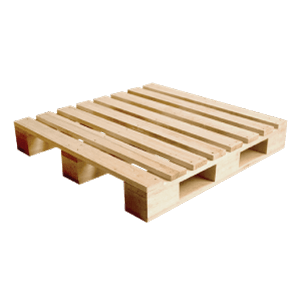




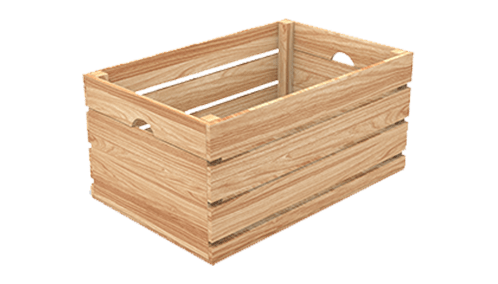
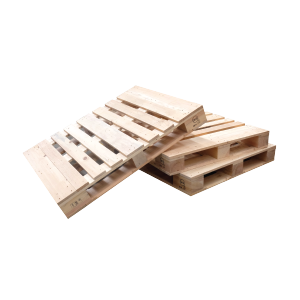

ISPM 15 Wooden Pallets — The United States is one of the major export destinations for Indonesian products. However, ensuring that the products themselves meet applicable requirements is only part of the export process. Exporters must also consider the packaging and materials used to transport their goods, including wooden pallets.
Using wooden pallets that do not comply with applicable requirements can create problems during inspection and may result in additional treatment, handling, or other corrective measures at the destination.
Many exporters focus on export documentation, customs procedures, and product requirements but overlook the requirements applicable to wood packaging materials.
In the United States, the U.S. Department of Agriculture’s Animal and Plant Health Inspection Service (USDA APHIS) regulates wood packaging material (WPM) entering or transiting the country. Regulated WPM must meet applicable treatment, marking, and phytosanitary requirements to help prevent the introduction of wood-boring pests.
Does the United States Require ISPM 15 Wooden Pallets?
Yes. The United States requires regulated wood packaging material entering the country to comply with ISPM 15 (International Standards for Phytosanitary Measures No. 15). This includes wood packaging materials such as pallets, pallet collars, skids, crates, boxes, and other materials used to support, protect, or carry cargo.
The purpose of these requirements is to reduce the risk of introducing and spreading harmful wood-boring pests that could affect forests, agriculture, and ecosystems.
For Indonesian exporters, using ISPM 15-compliant wooden pallets is therefore an important part of preparing shipments for the U.S. market.
What Is ISPM 15?
ISPM 15 is an international phytosanitary standard that establishes requirements for wood packaging material used in international trade.
The standard requires regulated solid wood packaging to undergo an approved treatment designed to eliminate pests that may be present in the wood. The treatment must be performed under the applicable national certification and control system.
For heat-treated wood packaging, the treatment must achieve a minimum wood core temperature of 56°C for at least 30 minutes.
After the required treatment has been completed, compliant wood packaging must carry the appropriate ISPM 15 mark.
Read Also: Export Wooden Pallet Prices
Key Wooden Pallet Requirements for Exporting to the United States
Exporters should consider several requirements when selecting wooden pallets for shipments to the United States.
These requirements relate not only to the treatment of the wood but also to the official marking and physical condition of the wood packaging material.
1. Appropriate Treatment
Heat treatment is one of the approved treatment methods used for ISPM 15 compliance.
For heat-treated wood packaging, the wood must reach a minimum core temperature of 56°C for at least 30 minutes. The treatment is intended to eliminate pests that may be present in the wood.
The treatment process must be carried out under the applicable accredited or authorized system so that the resulting wood packaging can be properly marked as compliant.
For exporters, it is therefore important to purchase pallets from a supplier that can demonstrate appropriate ISPM 15 compliance and treatment controls.
2. An Official ISPM 15 Mark
Proper treatment alone is not enough. Regulated wood packaging entering the United States must also carry an appropriate ISPM 15 mark.
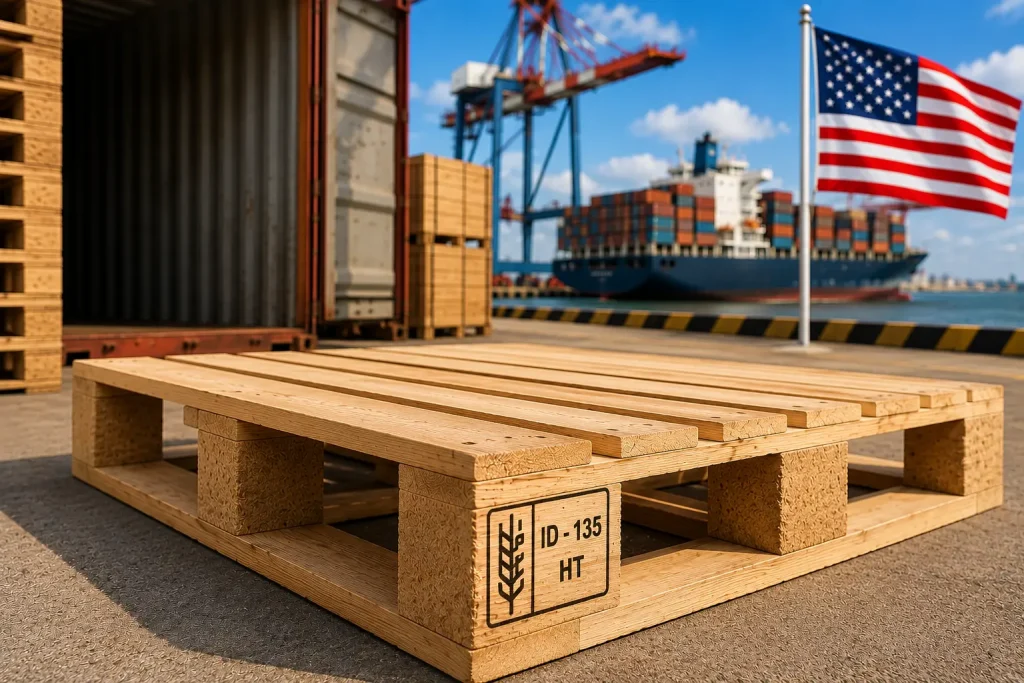
According to USDA APHIS, inspectors look for the official ISPM mark and signs that pests may be present. The mark includes the IPPC symbol, the two-letter country code, a unique facility number, and the applicable treatment code such as HT or MB.
The mark must be legible and comply with the applicable ISPM 15 marking requirements.
As of January 1, 2026, U.S. authorities resumed enforcement of the required hyphen separating the two-letter country code from the producer code following a temporary suspension during 2025.
This makes it particularly important for exporters to inspect pallet markings before the shipment leaves Indonesia.
Read Also: Export Wooden Pallet Prices
3. Properly Prepared and Suitable Wood Packaging
In addition to phytosanitary compliance, the pallet must be structurally suitable for the cargo being transported.
USDA APHIS requires regulated WPM entering the United States to be pest-free and debarked, in addition to meeting the applicable treatment and marking requirements.
From an operational perspective, exporters should also select wood packaging with appropriate dimensions, structural strength, and load capacity for the products being shipped.
High-quality wooden pallets made in Indonesia can help provide stable support for cargo throughout loading, containerization, transportation, and unloading.
Why Are These Requirements Important?
Many new exporters consider pallets to be a minor part of the shipping process. In reality, wood packaging is an important component of international logistics and is subject to phytosanitary controls.
Compliance with applicable WPM requirements can help reduce the risk of additional inspections, shipment delays, emergency actions, treatment requirements, or other measures at the U.S. border.
USDA APHIS states that shipments containing non-compliant wood packaging material will not be allowed to enter the United States.
Risks of Using Non-Compliant Wooden Pallets
Using non-compliant wooden pallets can result in additional costs and operational disruption.
If inspectors identify non-compliant WPM, the shipment may be subject to an Emergency Action Notification (EAN) or other corrective measures under the applicable APHIS procedures.
Depending on the circumstances, exporters or importers may face additional inspection, treatment, handling, storage, replacement, or transportation requirements.
These issues can disrupt delivery schedules and increase the total cost of an international shipment.
How to Choose the Right Wooden Pallet for Export to the United States
Selecting a pallet for the U.S. market requires more than simply choosing a pallet that meets a certain size or price point.
Exporters should consider ISPM 15 compliance, pallet dimensions, load capacity, product characteristics, handling equipment, container configuration, and transportation conditions.
Working with a pallet supplier experienced in international logistics can help ensure that the pallet specification is appropriate for the shipment.
Consider Pallet Dimensions and Load Capacity
Pallet dimensions should be selected based on the size and weight of the products being shipped, as well as the handling systems used by the exporter and consignee.
The correct dimensions can help improve container utilization, warehouse handling, and storage efficiency.
Load capacity is equally important. The pallet should be designed to support the cargo during loading, transportation, and unloading without compromising structural stability.
Consider Cost, Quality, and Compliance
Price should not be the only factor when selecting an export pallet.
A low-cost pallet that does not meet the applicable phytosanitary requirements can create significantly higher costs through delays, corrective measures, replacement, or other logistics disruptions.
Exporters should therefore evaluate pallet quality, ISPM 15 compliance, structural performance, treatment, marking, and supplier reliability together.
For an initial reference, you can also review wooden pallet prices based on pallet dimensions and application requirements.
Conclusion
The United States requires regulated wood packaging material entering or transiting the country to meet applicable ISPM 15 treatment and marking requirements. Wooden pallets used for international shipments must therefore be properly treated, appropriately marked, and suitable for the intended cargo and logistics application.
For Indonesian exporters, using ISPM 15-compliant wooden pallets, verifying the official marking, and selecting a supplier with appropriate treatment and quality-control processes can help reduce the risk of problems at the U.S. border.
Choosing the right export pallet is not simply about price. It is about ensuring phytosanitary compliance, structural performance, cargo protection, and reliable international logistics.
Email: info@bmr-pallets.com
WhatsApp: +62 818 600 135

