






Your Goods Are Ready to Ship, But Could the Pallet Cause a Rejection?
ISPM 15 Wooden Pallets — Many exporters focus heavily on product quality, export documentation, and shipping schedules. However, one important element is often overlooked: the wooden pallets used for international shipments.
Wooden pallets that do not meet the requirements of the destination country can lead to additional inspections, customs delays, treatment requirements, or other corrective actions.
When this happens, the resulting costs can be significantly higher than the cost of the pallet itself.
Read Also: What Is ISPM 15 for Wooden Pallets?
Why Can Wooden Pallets Cause Export Shipment Rejection?
Countries around the world implement phytosanitary requirements for wood packaging materials to reduce the risk of introducing and spreading pests and other organisms through international trade.
For this reason, wooden pallets used for international shipments may need to comply with ISPM 15 (International Standards for Phytosanitary Measures No. 15), depending on the requirements of the destination country.
ISPM 15 establishes requirements for the treatment and marking of regulated wood packaging materials. Approved treatments are designed to eliminate pests that may be associated with solid wood packaging.
Without the appropriate treatment and marking, wooden pallets may be considered non-compliant and could be subject to additional measures at the destination.
Risks of Using Non-Compliant Wooden Pallets
Using wooden pallets that do not meet applicable ISPM 15 requirements can create several logistics and compliance risks.
1. Goods May Be Held for Inspection
Quarantine or border authorities may hold a shipment for further inspection if wood packaging material does not appear to meet the applicable import requirements.
This can delay cargo release and potentially disrupt planned distribution schedules.
Additional inspection, handling, or storage charges may also arise depending on the circumstances and destination-country procedures.
2. Additional Treatment May Be Required at the Destination
In certain cases, non-compliant wood packaging may be subject to treatment or other corrective measures before the shipment can proceed.
Depending on the country’s regulations, the required action may involve treatment, removal, replacement, or destruction of the affected wood packaging material.
The associated costs and responsibility for those costs depend on the applicable regulations and commercial arrangements between the parties.
3. The Shipment May Be Ordered to Leave the Country
If the wood packaging is considered non-compliant and cannot be accepted under the destination country’s regulations, authorities may require the affected packaging or shipment to be removed or re-exported.
This can result in additional logistics, storage, handling, and transportation costs.
More importantly, shipment delays can affect delivery commitments and customer relationships.
4. Business Reputation May Be Affected
Repeated shipment delays or compliance issues can affect relationships with international buyers.
For exporters developing new international markets, reliable delivery and regulatory compliance are important factors in maintaining customer confidence.
A properly managed pallet specification and compliance process can therefore become an important part of export logistics management.
Read Also: Latest ISPM 15 Wooden Pallet Prices
How to Avoid Export Shipment Rejection Due to Wooden Pallets
Use ISPM 15-Compliant Wooden Pallets
One of the most important steps is to use export wooden pallets that have undergone the treatment required under the applicable ISPM 15 requirements.
Properly treated wood packaging can help exporters meet phytosanitary requirements in many international markets.
However, exporters should always verify the specific import requirements of the destination country before shipping.
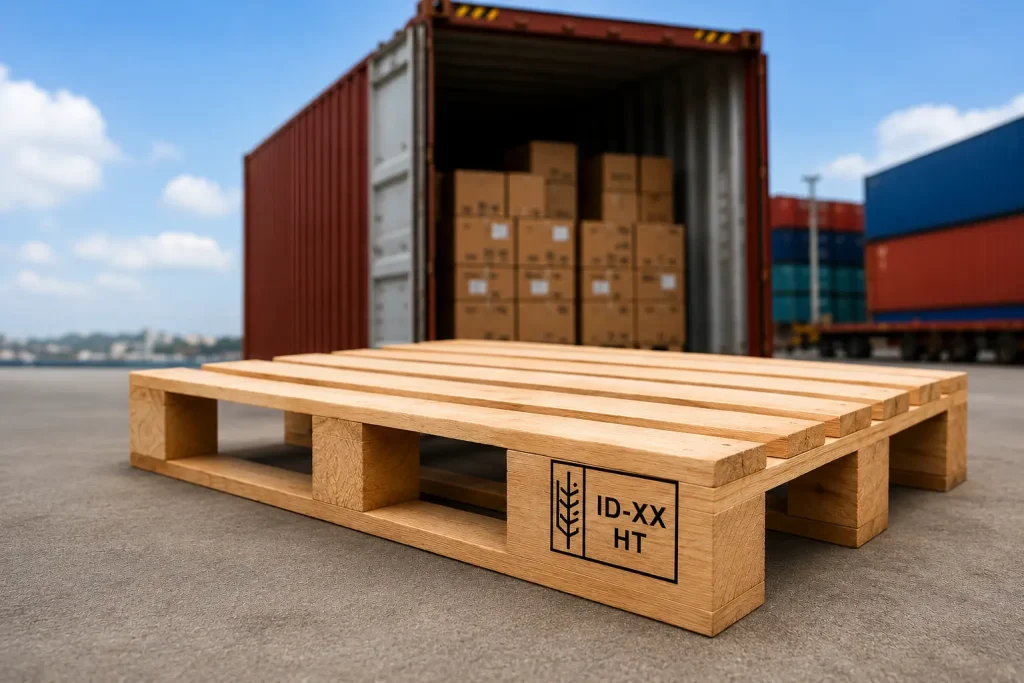
Make Sure the ISPM 15 Mark Is Present
Regulated wood packaging that complies with ISPM 15 requirements should carry the appropriate ISPM 15 mark applied by an authorized or approved entity under the relevant national system.
The mark should be clearly visible and legible.
Before loading the shipment, exporters should inspect the pallet markings and make sure they have not been removed, damaged, or obscured.
Buy from a Trusted Supplier
Not every pallet marketed as an export pallet necessarily meets the requirements of the destination market.
Therefore, it is important to work with a supplier that understands international shipping requirements and follows appropriate treatment and quality-control procedures.
If you are looking for wooden pallets for export, ask the supplier about the treatment process, ISPM 15 compliance, pallet specifications, and applicable documentation.
Avoid Used Pallets with an Unclear Treatment History
Used pallets can present additional compliance risks if their treatment status or origin cannot be verified.
Markings may be damaged or missing, and the pallet’s treatment history may not be documented.
For export shipments, using pallets with verifiable treatment status and clear markings can help reduce compliance uncertainty.
Match the Pallet Specifications to the Cargo Load
Phytosanitary compliance is only one part of choosing the right export pallet. The pallet must also be structurally capable of supporting the cargo during handling, container loading, transportation, and unloading.
Selecting the appropriate dimensions, wood material, pallet design, and load capacity can help reduce the risk of pallet failure and cargo damage during transportation.
Before selecting a pallet specification, exporters should consider the product weight, load distribution, handling equipment, container configuration, and transportation conditions.
For more information, you can also refer to wooden pallet prices based on pallet dimensions and application requirements.
Do All Countries Require ISPM 15?
Many countries have implemented ISPM 15 requirements for regulated wood packaging materials used in international trade. However, the exact requirements and enforcement procedures can vary by destination.
Exporters should not assume that the same requirements apply to every country.
Because import regulations can change, exporters should verify the latest wood packaging requirements with the relevant plant protection or biosecurity authority in the destination country before shipping.
This is particularly important for shipments involving countries with strict biosecurity controls.
Conclusion
Export shipment rejection is not always caused by the product itself or by incomplete shipping documentation. In some cases, non-compliant wooden pallets or wood packaging materials can also create significant export risks.
Using ISPM 15-compliant export wooden pallets, ensuring that the appropriate marking is present and legible, and working with a reliable pallet supplier are practical steps that can help reduce compliance risks.
For exporters, choosing the right pallet is not simply about price. It is about ensuring that the pallet meets the phytosanitary, structural, handling, and destination-market requirements applicable to the shipment.
By selecting the right export pallet from the beginning, businesses can reduce the risk of delays, additional treatment, cargo handling issues, and other unexpected logistics costs.

