
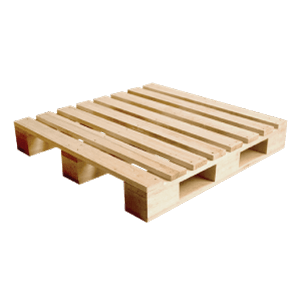



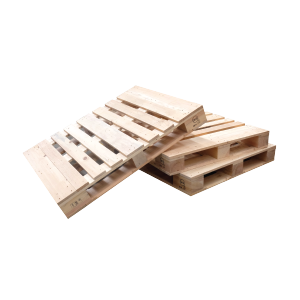

A standard 20-foot container holds 11 Euro pallets (1200 × 800 mm), 10 pallets of 1100 × 1100 mm or 9 pallets of 1200 × 1000 mm on the floor in a single layer. If the cargo is low and light enough to stack two high, those numbers double to 22, 20 and 18 pallets.
These counts are based on the typical internal dimensions of a 20 ft dry container: about 5,898 mm long, 2,352 mm wide and 2,393 mm high, with a door opening of roughly 2,340 × 2,280 mm. Dimensions vary slightly between container owners, so confirm the exact figures with your shipping line or forwarder before you finalise a load plan.
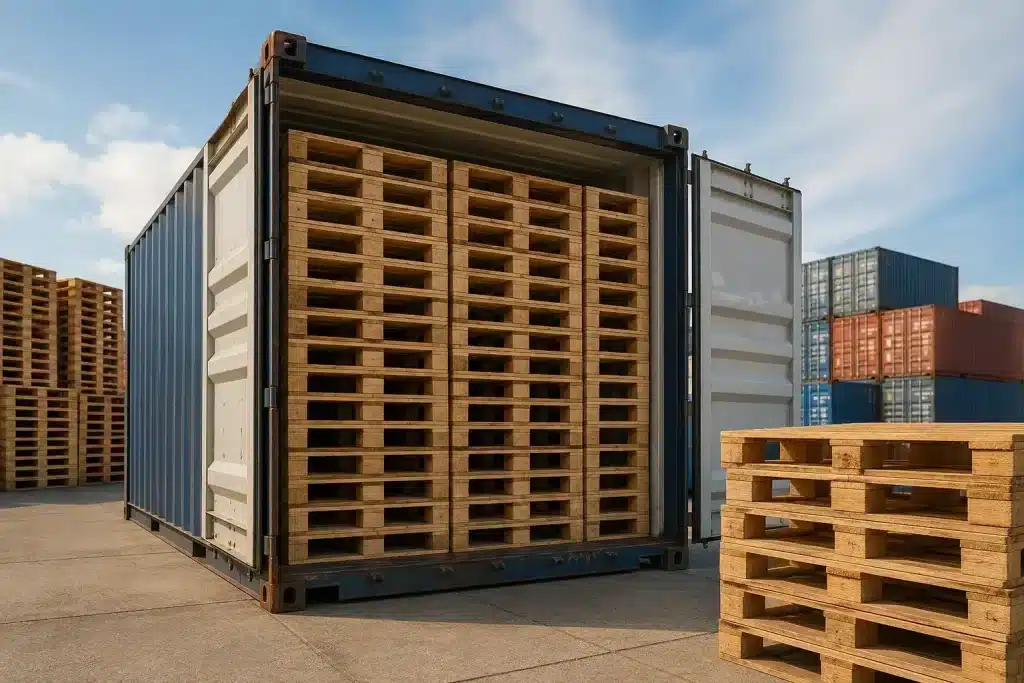
Pallets per 20 ft Container by Pallet Size
The table below shows the maximum single-layer count for the common ISO 6780 pallet sizes and a few other sizes we are often asked about, assuming the loaded pallet does not overhang the pallet base.
| Pallet size (mm) | Common name | Floor layout | 1 layer | 2 layers |
|---|---|---|---|---|
| 1200 × 800 | Euro pallet (EPAL) | 7 turned crosswise + 4 lengthwise | 11 | 22 |
| 1100 × 1100 | Asian standard square | 2 across × 5 rows | 10 | 20 |
| 1140 × 1140 | Square export pallet | 2 across × 5 rows (tight fit) | 10 | 20 |
| 1200 × 1000 | Industrial / ISO pallet | 5 crosswise + 4 lengthwise | 9 | 18 |
| 1219 × 1016 (48 × 40 in) | North American standard | 5 crosswise + 4 lengthwise | 9 | 18 |
| 1200 × 1200 | Large square pallet | 1 across × 4 rows | 4 | 8 |
You will often see “10 pallets” quoted for 1200 × 1000 mm or 48 × 40 in pallets. Placing two of them side by side with the long side across the container needs at least 2,400 mm of width, and a standard 20 ft box is only about 2,352 mm wide. The realistic single-layer count is therefore 9. Treat 10 as an optimistic figure unless your forwarder confirms it for a specific container.
How the Numbers Are Worked Out
The trick with rectangular pallets is to load two lanes in different orientations. For Euro pallets, one lane has the pallets turned crosswise (1200 mm across the container, 800 mm along it), so 7 fit in the length: 7 × 800 = 5,600 mm. The second lane has the pallets lengthwise (800 mm across, 1200 mm along), so 4 fit: 4 × 1,200 = 4,800 mm. Together the two lanes use 2,000 mm of the width, leaving room for handling, and give 11 pallets.
The same pattern works for 1200 × 1000 mm pallets: a crosswise lane of 5 (5 × 1,000 = 5,000 mm) plus a lengthwise lane of 4 (4 × 1,200 = 4,800 mm), using 2,200 mm of width. Square pallets of 1100 × 1100 mm or 1140 × 1140 mm simply go two across and five deep, which is why they use the floor so efficiently.
Large square 1200 × 1200 mm pallets are the worst fit: two cannot sit side by side, so about half of the floor stays empty. If you have a free choice of size, avoid them for 20 ft containers.
Measure the Loaded Footprint, Not Just the Pallet
Counts only work if the cargo stays within the pallet edges. Cartons that overhang by even 20–30 mm per side can turn a 10-pallet load into 8. Also leave a little space at the doors so the last pallets can be placed with a forklift or pallet jack and the doors can close, and fill remaining gaps with dunnage or airbags so the load cannot shift.
When Can You Stack Pallets Two High?
Double stacking doubles the count, but three conditions must all be met:
- Height: the internal height is about 2,393 mm, but the door opening is only about 2,280 mm. Two loaded pallets stacked together must pass through the door, so each one should be no taller than roughly 1,100 mm including the pallet itself.
- Strength: the bottom pallet and its packaging must carry the top pallet for the whole voyage. Check the pallet’s static load rating and the crush strength of the cartons. See our guide to wooden pallet load capacity.
- Weight: a 20 ft container’s maximum payload is typically in the range of about 21,000 to 28,000 kg, depending on the container’s tare and rating (shown on its CSC plate). Road weight limits at origin or destination are often lower than the container limit. Heavy goods such as tiles, metal parts or liquids usually reach the weight limit long before the floor is full.
Checklist for Planning a 20 ft Container Load
- Measure the loaded pallet: length, width (including any overhang), height and gross weight.
- Choose a pallet size that suits the container width. 1100 × 1100, 1140 × 1140 and 1200 × 800 mm use the floor best.
- Multiply weight per pallet by the number of pallets and compare it with the container payload and road limits.
- Decide whether the cargo can be stacked, and check that the pallets and packaging are strong enough.
- For international shipments, make sure solid wood pallets are ISPM 15 treated and marked.
- Plan load securing: stretch wrap or straps on each pallet, and dunnage or airbags in the gaps.
- Send the plan to your forwarder to confirm the container’s exact internal dimensions and payload.
Choosing a Pallet Size When You Have the Choice
If your product dimensions allow it, a pallet designed around the container usually beats a standard size. Square 1100 × 1100 or 1140 × 1140 mm pallets fit two across with very little wasted width, while EPAL Euro pallets are the best choice when the goods are going to Europe and will enter the European pallet exchange system. For unusual products, a custom footprint can be calculated from the carton size so that both the pallet and the container are filled.
Keep the destination in mind too. A pallet that maximises the container may still be the wrong size for the customer’s racking or automated warehouse, so it is worth asking the buyer which pallet sizes their warehouse accepts before you decide.
Frequently Asked Questions
How many pallets fit in a 20 ft container?
In a single layer, a standard 20 ft container takes 11 Euro pallets (1200 × 800 mm), 10 pallets of 1100 × 1100 mm, or 9 pallets of 1200 × 1000 mm. Stacked two high, the counts are 22, 20 and 18.
How many Euro pallets fit in a 20 ft container?
Eleven Euro pallets fit on the floor of a 20 ft container, using one lane of 7 pallets turned crosswise and one lane of 4 lengthwise. If the goods can be stacked, 22 Euro pallets fit.
How many 1200 x 1000 pallets fit in a 20 ft container?
Nine pallets of 1200 × 1000 mm fit in one layer, or 18 when double stacked. Ten is sometimes quoted, but two of these pallets need 2,400 mm side by side and a standard 20 ft container is only about 2,352 mm wide.
How many pallets fit in a 40 ft container?
A 40 ft container has the same width and height but is about 12,032 mm long, so it takes roughly twice as many: typically 23–24 Euro pallets or 20–21 pallets of 1200 × 1000 mm in one layer. Confirm the exact count with your forwarder.
Do wooden pallets in an export container need ISPM 15?
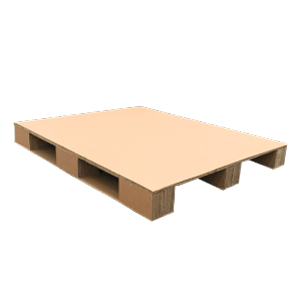
Yes, for most destinations. Solid wood pallets in international shipments must be heat treated or fumigated under ISPM 15 and carry the IPPC mark. Plywood and paper pallets are exempt.
Need Pallets Sized for Your Container?
BMR Pallets has made wooden pallets since 2009 in Karawang, Gresik and Boyolali, including custom sizes, EPAL Euro pallets and ISPM 15 heat-treated export pallets (registration IDs 112 and 135). Send us your product dimensions, weight per pallet and container type, and we can suggest a pallet size that fits the load. See our wooden pallets or request a quote. You can also reach us on WhatsApp at +62 818-600-135 or info@bmr-pallets.com.

