




Overview of Paper Pallets
Paper pallets are made from engineered paper-based materials designed with specialized structures to provide sufficient strength while keeping the pallet lightweight. They are used as load platforms for goods in warehouses, distribution operations, and export shipments. Paper pallets are also known for being lightweight and easy to handle.
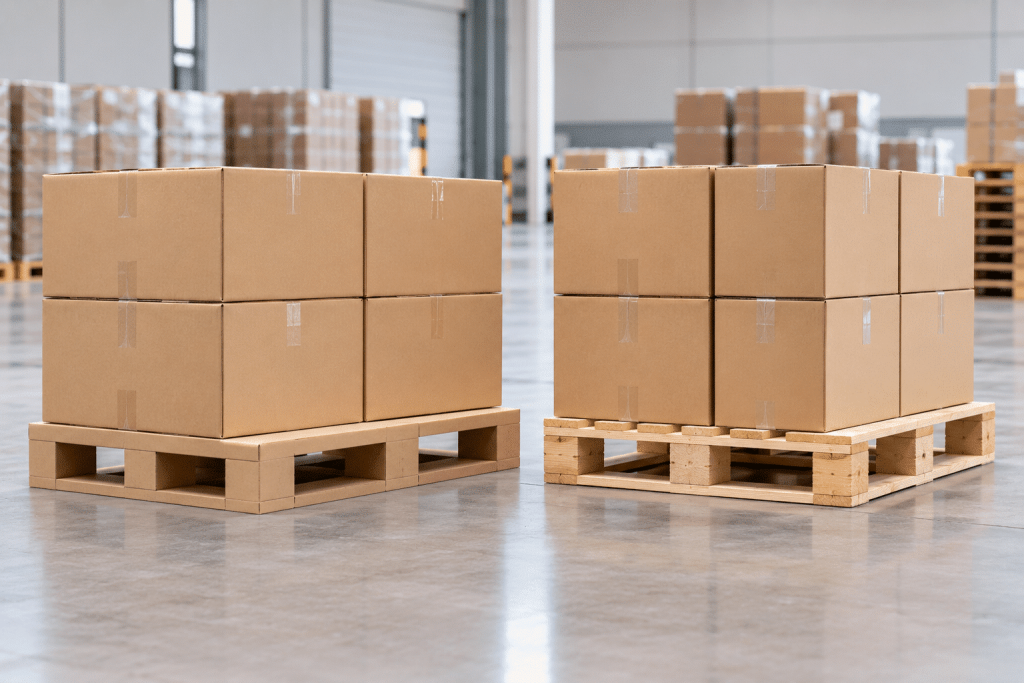
In industrial applications, paper pallets are available in several types with different characteristics. The main differences are their internal structure, load-bearing capacity, and suitability for specific applications.
Honeycomb Paper Pallets
Honeycomb paper pallets use a honeycomb-shaped internal structure. This design provides high compressive strength while keeping the pallet lightweight. As a result, this type of pallet is commonly used for manufacturing and export applications.
When comparing paper pallets, the honeycomb type offers higher static load capacity. Depending on its design, a honeycomb paper pallet can support loads of up to 1,000–1,500 kg. It can also provide good stability during long-distance transportation.
Corrugated Paper Pallets
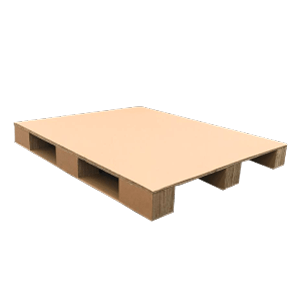
Corrugated paper pallets are made from multiple layers of corrugated paperboard arranged to form a pallet structure. Their construction is simpler than honeycomb pallets, but they can still provide sufficient strength for certain applications.
For warehouse operations and lightweight distribution, corrugated pallets are often a practical option. They are very lightweight and generally have lower production costs. This makes them suitable for one-way shipments and products with moderate loads.
Comparing Paper Pallet Strength
In terms of strength, honeycomb paper pallets generally offer greater load-bearing capability. Their internal structure helps distribute pressure more evenly. Corrugated pallets have more limited strength, but can still be suitable for many logistics applications.
For industrial operations, pallet selection should be based on the weight and handling requirements of the goods. Heavy and stacked products may require honeycomb pallets, while lightweight products can be handled using corrugated pallets when the application is suitable.
Comparing Paper Pallet Weight
Weight is one of the main advantages of paper pallets. The average weight of a paper pallet is approximately 5–7 kg, which is significantly lighter than a wooden pallet that can weigh around 20–25 kg, depending on its design and specifications.
When comparing paper pallets, corrugated pallets are generally lighter than honeycomb pallets. Their low weight can help reduce transportation costs and make pallet handling easier in warehouse operations.
Comparing Usage Costs
From a cost perspective, corrugated pallets generally have a lower purchase price because their structure and materials are relatively simple. Honeycomb pallets may cost more, but the additional cost can be associated with their higher load-bearing capability.
Over the course of a logistics operation, lightweight paper pallets can contribute to logistics cost efficiency. Their lower weight can reduce freight costs, particularly in air freight and export shipments. Therefore, total pallet costs should be evaluated based on the entire logistics application rather than purchase price alone.
Comparing Paper Pallets for Export
Paper pallets can offer advantages for export operations. Because they are not made from solid wood, paper pallets generally do not fall under the same ISPM 15 requirements that apply to regulated solid wood packaging materials. This can simplify certain export processes.
Read Also: Complete Wooden Pallet Solutions in Indonesia
When comparing paper pallets for export, both honeycomb and corrugated types can be suitable depending on the shipment requirements. For heavier export goods and longer-distance transportation, honeycomb paper pallets may provide greater structural support.
Comparing Hygiene and Cleanliness
Cleanliness is an important consideration for the food, beverage, and pharmaceutical industries. Paper pallets can provide a clean load platform with no wood splinters. Depending on the manufacturing process and application requirements, this can be an advantage in environments where cleanliness is important.
Both honeycomb and corrugated paper pallets can be manufactured for applications with specific cleanliness requirements. However, the suitability of a pallet should always be evaluated based on the hygiene standards and handling conditions of the facility.
Comparing Durability
For short- to medium-term use, paper pallets can provide good performance when used within their specified load and environmental conditions. However, they are generally more suitable for one-way shipments or controlled-use applications than for repeated heavy-duty use.
Honeycomb paper pallets generally offer greater durability than corrugated pallets because of their structural design. As a result, honeycomb pallets can be considered for temporary storage and selected repeated-shipment applications where the operating conditions are suitable.
Comparing Environmental Impact
Paper pallets offer potential environmental advantages because paper-based materials can be recycled through established paper-recycling systems. The source article also notes that Indonesia’s paper recycling rate has reached more than 65% based on national paper industry data.
When comparing paper pallets, both honeycomb and corrugated types can support recycling-oriented logistics strategies. Their use can also reduce reliance on conventional wooden or plastic pallet materials in suitable applications.
The Role of Paper Pallets in the Logistics Industry
Paper pallets can help logistics operations improve handling efficiency. Goods can be arranged more efficiently, while loading and unloading can become easier due to the pallet’s lightweight construction. The lower weight can also help reduce physical handling demands for warehouse personnel.
With an appropriate pallet system, warehouse and distribution operations can become more organized. As a result, paper pallets are increasingly being considered as part of modern supply chain solutions.
PT. Bumi Mandiri Resources’ Role in Supplying Paper Pallets
To support industrial requirements, PT. Bumi Mandiri Resources provides different types of paper pallets. BMR manufactures honeycomb and corrugated paper pallets based on customer load requirements and intended applications.
BMR also conducts compression testing and design adjustments to help ensure that paper pallets perform appropriately for their intended use. This approach allows customers to select a pallet solution that matches their specific logistics requirements.
How to Choose the Right Paper Pallet
Choosing the right paper pallet requires consideration of several factors. Product weight is one of the primary considerations. Shipping method and distribution distance should also be evaluated.
For warehouse operations and lightweight shipments, corrugated pallets may be sufficient. For heavier products and long-distance export shipments, honeycomb pallets may provide greater structural support.
Conclusion
The comparison of paper pallets shows that each type has its own advantages. Honeycomb paper pallets offer greater strength and stability, while corrugated paper pallets provide advantages in terms of weight and cost.
With paper pallet solutions from BMR, industrial companies can select a pallet type based on their specific operational requirements. Understanding the differences between paper pallet types is therefore an important step in improving logistics and distribution efficiency.
If you want to explore other pallet types or specific applications, continue reading our related content to gain broader and more relevant insights into industrial pallet solutions.
Email: info@bmr-pallets.com
WhatsApp: +62 8119-787-911

