
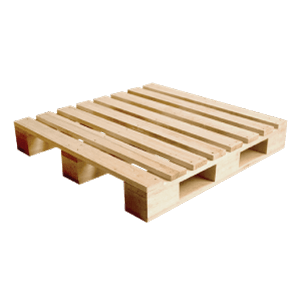


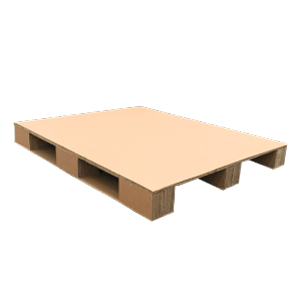


Pallet size is often considered a specification that can simply be selected from the standard sizes available. However, not all products have uniform dimensions, making custom-size paper pallets a suitable option when standard sizes do not provide optimal results.
For procurement and operations teams, determining pallet dimensions should not focus solely on the pallet itself. Product dimensions, stacking patterns, load capacity, handling methods, and available space during transportation all need to be considered together.
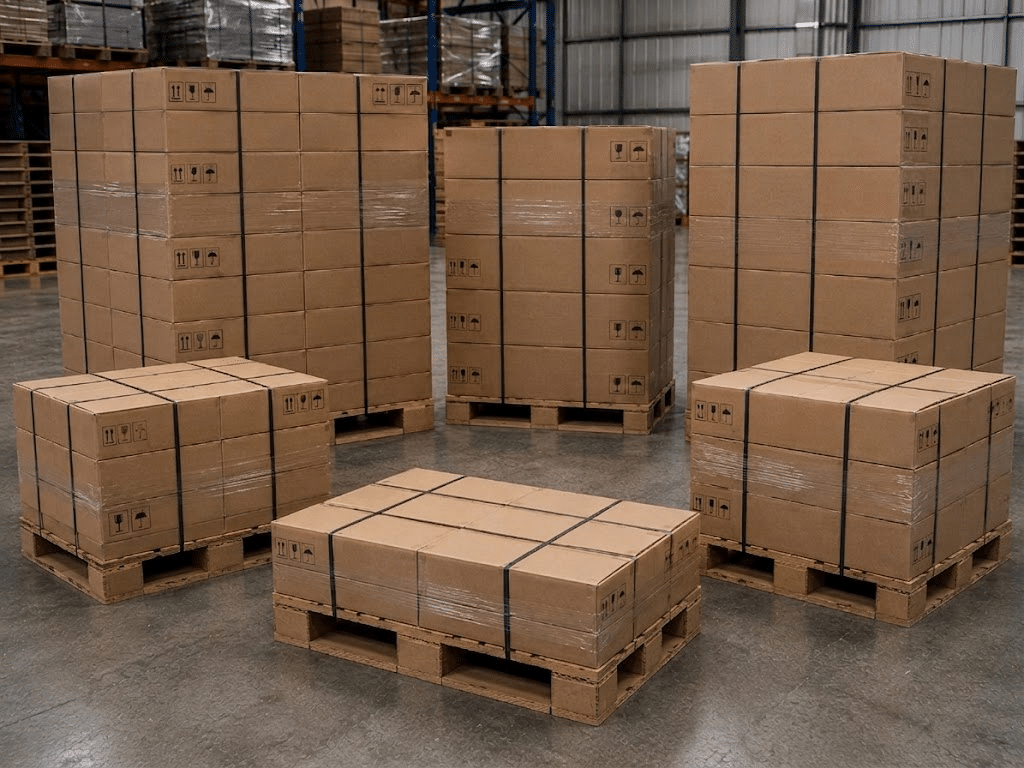
Why Standard Paper Pallet Sizes Are Not Always Suitable
Standard sizes make the procurement process easier because pallets can be selected directly based on existing specifications. However, when product dimensions differ significantly from those sizes, using a standard pallet may result in unnecessary empty space or may cause part of the product to extend beyond the pallet edges.
This becomes even more important for high-volume shipments. Space that is not utilized on a single pallet may seem insignificant, but when multiplied across dozens or hundreds of units, its impact on storage and transportation efficiency can become substantial.
Products with specialized shapes and packaging may also require different pallet dimensions. For example, electronic products with precise dimensions, industrial components with specific footprints, or consumer goods with specially designed packaging.
In such situations, non-standard paper pallets can provide flexibility that is not available with common pallet sizes. However, custom size does not mean that making a pallet larger or smaller is always better. The dimensions still need to be determined based on technical requirements.
The Process of Determining Custom-Size Paper Pallets
Measuring Requirements Based on Product Dimensions
The first step is to determine the actual dimensions of the product or unit load that will be placed on the pallet. The length, width, height, weight, and number of products per unit load should be recorded before determining the pallet dimensions.
The stacking pattern should also be considered. The same product may require different pallet dimensions depending on its orientation or the number of layers being stacked.
Ideally, the pallet dimensions should provide sufficient support for the products without creating unnecessary overhang. On the other hand, an oversized pallet can also create unused space.
Therefore, determining the dimensions of a custom-size paper pallet should start with the product and its stacking pattern rather than simply aiming to create a different pallet size.
Considering Compatibility with Containers and Trucks
Once the product requirements are established, the pallet dimensions should be compared with the available transportation space. The internal dimensions of containers or vehicles must be taken into account to ensure that the pallet configuration makes efficient use of available space.
For example, a change of just a few centimeters in pallet dimensions can affect the number of units that can be placed in a single loading configuration. Therefore, a loading simulation should be conducted before finalizing the dimensions, especially when the pallets are intended for high-volume shipments.
In addition to length and width, the height of the unit load should also be considered. A taller pallet or unit load can affect the total cargo height and ultimately limit the number of units that can be loaded or stored.
Adjusting to Racking and Warehouse Systems
Custom sizes must also be compatible with existing storage systems. If the pallet will be used in selective racking, drive-in racking, conveyor systems, or automated systems, its dimensions and construction need to be adjusted to meet the requirements of those systems.
A pallet that fits the product perfectly should not end up being unsuitable for the existing warehouse facilities. Therefore, specifications for racks, conveyors, forklifts, pallet trucks, or automated handling systems should be provided to the supplier at the initial stage.
Technical Limitations of Custom-Size Paper Pallets
Custom sizes offer flexibility, but there are technical limitations that need to be considered. The paper materials used in pallets have specific strength characteristics, so changes in dimensions, structural configuration, and load distribution can affect their performance.
The load should not be calculated based solely on total weight. Load position, stacking pattern, number of support points, storage duration, and handling methods can also affect the pallet’s ability to support the load.
Highly unusual dimensions may also affect production efficiency. Suppliers need to consider material availability, cutting processes, component configurations, and minimum production quantities to ensure that the custom size remains practical from both operational and cost perspectives.
Compatibility with automated handling equipment is another consideration. If the pallet will be used on a conveyor or in an Automated Storage and Retrieval System (ASRS), dimensional tolerances and structural characteristics must comply with the machine’s specifications.
In other words, custom sizing is not simply about changing the length and width of a pallet. Changes in dimensions can affect the design, load capacity, production process, and how the pallet is used in actual operations.
Also read “Paper Pallet Design”
Examples of Custom-Size Applications Across Industries
The electronics industry is one example of an application that may require pallets with precise dimensions. Products and their packaging often have specific dimensions, meaning an oversized pallet can create unnecessary empty space, while an undersized pallet may not provide adequate support.
In the consumer goods industry, custom requirements can also arise due to different packaging shapes and configurations. Products packed in cartons with specific dimensions may require particular stacking patterns to keep the unit load stable during storage and transportation.
Export requirements can also be a reason for companies to consider custom sizes. When the goal is to optimize container space, pallet dimensions need to be analyzed together with product configuration and loading patterns to maximize the number of units that can be shipped in a single container.
However, space optimization should not come at the expense of load safety. A more space-efficient pallet must still be capable of supporting the load and performing properly with the handling methods being used.
How to Order Custom-Size Paper Pallets
Before contacting a supplier, buyers should prepare as much technical information as possible. At a minimum, the available data should include the product’s length, width, height, load weight, number of products per pallet, stacking pattern, and handling method.
If the pallet will be used for transportation, information about the type of vehicle or container will also help the supplier understand the actual requirements. Likewise, if the pallet will be used with a racking or conveyor system, the system specifications should be provided from the beginning.
Next, discuss the possible design options with the supplier. An experienced supplier should not simply accept the dimensions provided but should also be able to evaluate whether those dimensions are suitable for the required load, handling methods, and production process.
For large-volume requirements, samples or prototypes should also be considered before moving into mass production. Testing can help determine whether the pallet’s dimensions and construction perform as expected under actual operating conditions.
This stage is important because specifications that appear suitable on paper may not necessarily provide the same performance during actual loading, storage, or handling processes.
Also read “Paper Pallets for the Manufacturing Industry”
Custom Sizes Offer Flexibility, but Specifications Remain Key
Custom-size paper pallets can be a solution when standard sizes no longer match the characteristics of the products or logistics systems being used. Flexible dimensions allow companies to adapt pallets to product dimensions, transportation requirements, warehouse capacity, and handling methods.
However, custom sizing should not be understood simply as a request to manufacture a pallet with a specific dimension. Dimensions should be determined together with load capacity, structural design, stacking patterns, handling systems, and operating conditions.
The clearer the specifications provided from the beginning, the easier it will be for the supplier to evaluate whether the requested dimensions can be produced and used optimally. With this approach, a custom pallet is not simply a pallet with dimensions that differ from standard sizes, but part of a packaging solution designed around specific operational requirements.
If you require paper pallets with custom dimensions, BMR can help discuss your product specifications, load requirements, and operating conditions to determine the most suitable pallet configuration.
E-mail: info@bmr-pallets.com
WhatsApp: +62 817-200-135

