




EPAL Pallets: One Broken Pallet Can Put an Entire Shipment at Risk — Take Full Control
Imagine a scenario that happens all too often. Your shipment of premium products, worth hundreds of millions of rupiah, finally arrives at its destination port, such as Rotterdam or Hamburg. You breathe a sigh of relief, but it is short-lived. Your logistics agent delivers bad news: the container has been held by customs authorities. Not because of product quality issues or incomplete documentation.
The cause is something often overlooked: a pallet at the bottom of the stack breaks during transit. This incident not only damages some of the goods but can also destabilize the entire load, making unloading unsafe. The resulting losses can quickly add up, including penalties, additional handling costs, potential further product damage, delayed customer deliveries, and, most importantly, the erosion of the reputation and trust you have worked hard to build.

Why EPAL Pallet Standards Are the Key to Smooth Export Operations
This is every exporter’s nightmare: a hidden risk lurking at the foundation of every shipment. However, this is not a cost of doing business that must simply be accepted. It is a variable that can and should be controlled. This is why taking full control of every element in your supply chain is essential, starting with even the most fundamental component: the pallet.
This article explores in depth, using data, why EPAL pallet standards are more than just a packaging choice. They are a strategic decision that helps ensure a high level of reliability. Think of them as your passport to smoother export operations—an investment that protects cargo value, safeguards your reputation, and, most importantly, provides peace of mind. With greater confidence in your logistics process, you can focus on growing your business rather than managing unexpected supply chain disruptions.
Read also: What Is the Most Suitable Standard Export Pallet Size?
Understanding the Foundation of Reliability: What Is the EPAL Pallet Standard?
For many businesses in Indonesia, the term “EPAL pallet” may still sound unfamiliar or be seen simply as a premium wooden pallet brand. This understanding is not entirely wrong, but it does not tell the whole story. To truly appreciate its value, it is important to understand that EPAL (European Pallet Association) is not merely a pallet manufacturer or brand. It is a global system that regulates, monitors, and ensures quality, safety, and pallet exchange standards across the world.
Established in 1991, EPAL created a system in which every pallet bearing its logo—whether manufactured in Germany, Poland, or Indonesia by a licensed producer such as BMR—is required to meet the same standards for quality, dimensions, and load-bearing capacity. This consistency enables the European Pallet Pool (EPP), an open pallet exchange system that allows pallets to be exchanged on a “pallet-for-pallet” basis throughout the supply chain.
The scale and widespread acceptance of this standard demonstrate its significance. Today, more than 650 million EPAL pallets are in active circulation worldwide. This figure is more than just a statistic; it reflects the level of trust the global logistics industry places in the system. When an Indonesian exporter uses an EPAL pallet, they are not simply using a wooden platform. They are adopting a standardized system recognized and accepted by logistics partners, warehouses, and customs authorities across Europe and many other parts of the world.
How EPAL Technical Specifications Protect Your Cargo
The reliability of EPAL pallets comes from defined technical requirements and quality controls. Each component, from the dimensions of the wood to the type and placement of nails, contributes to consistent performance during transport and handling.
Let’s take a closer look at the features that contribute to their structural strength.
Contact our experts via WhatsApp for a free consultation.
Precision Dimensions for Perfect Compatibility
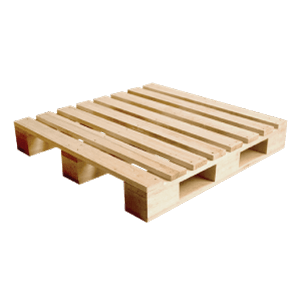
Every EPAL EUR 1 pallet is manufactured to standard dimensions: 1,200 mm long, 800 mm wide, and 144 mm high. However, what sets it apart is its strict dimensional tolerance: only +8/-5 mm for length and width, and +10/-0 mm for height.
This precision is not simply about appearance. Standardized dimensions ensure that pallets fit properly into Automated Storage and Retrieval Systems (AS/RS), can be safely handled by forklifts from all four sides, and help maximize space utilization in standard European containers.
Read Also: Buy Certified EPAL Pallets
High-Quality Materials Under Strict Quality Control
EPAL pallets are constructed from 11 wooden boards and 9 support blocks made from high-quality solid wood or compressed woodchip blocks. The wood must undergo kiln-drying to achieve a moisture content below 22%, a crucial step in preventing mold growth and reducing the risk of warping that could compromise pallet stability.
The types of wood used are also standardized, typically softwood species such as pine or spruce, which offer an optimal strength-to-weight ratio. Board thickness is specified within a range of 22 mm to 25 mm to ensure adequate load-bearing capacity.
Patented Nailing Pattern: The Core of Structural Strength
One of the key factors behind the strength of EPAL pallets is their specialized nailing system. Each pallet is assembled using exactly 78 EPAL-approved nails. More importantly, these nails must be installed according to a prescribed pattern that cannot be altered. This pattern is not simply intended to hold the wood together; it is an engineered design that provides diagonal rigidity.
This rigidity is essential for preventing the pallet from twisting or deforming under dynamic stress, such as vibrations during sea transport or sudden braking by trucks. As a result, cargo stacks remain more stable and secure. In addition, the bottom boards feature chamfered edges, a small but important design detail that allows forklift forks to enter smoothly and safely, reducing the risk of pallet damage during loading and unloading.
Superior, Verified Load-Bearing Capacity
These strict technical specifications result in reliable load-bearing performance. EPAL pallets are designed to support a safe working load of up to 1,500 kg under dynamic conditions, such as when the pallet is being moved. When stacked on a flat, solid surface under static conditions, the bottom pallet can support a load of up to 5,500 kg.
These figures provide exporters with a clear technical basis for assessing pallet capacity and help reduce the risk of pallet failure under heavy cargo loads, including dense and heavy industrial products.
To provide a clearer picture, the following table compares key specifications of standardized EPAL pallets with those of conventional export wooden pallets, which may not follow a consistent set of standards.
Key Specification Comparison: EPAL Pallets vs. Conventional Export Wooden Pallets
| Feature | EPAL Pallet Standard | Conventional Export Wooden Pallets |
| Wood Quality | Controlled, kiln-dried wood with moisture content below 22% | Often made from wood with uncontrolled moisture content, making it more susceptible to mold and warping |
| Treatment | Mandatory heat treatment (HT) in accordance with ISPM 15, plus EPAL quality control | ISPM 15 heat treatment may be provided when required, without standardized structural quality control |
| Dimensions and Tolerances | 1,200 × 800 × 144 mm with strict dimensional tolerances | Dimensions and tolerances vary, potentially making them unsuitable for automated systems |
| Dynamic Load Capacity | Specified capacity of 1,500 kg | Not standardized; varies considerably depending on manufacturer and construction quality |
| Quality Control System | Mandatory inspections by independent auditing bodies appointed by EPAL | Generally relies on internal manufacturer inspections, if any |
| Markings | Includes EPAL logo, license details, IPPC stamp, repair markings, and other required identifiers | Usually limited to an IPPC stamp for ISPM 15 compliance |
This comparison highlights that choosing an EPAL pallet is not simply about selecting a product. It means choosing an engineered system designed to deliver consistent reliability. For risk-conscious exporters, this difference can separate predictable logistics performance from unnecessary uncertainty.
More Than a Stamp: Why EPAL Goes Beyond the Minimum Requirements of ISPM 15
In the export industry, two terms are often mistaken for one another, even though they serve fundamentally different purposes: ISPM 15 and EPAL. Treating an ISPM 15 stamp as a guarantee of overall pallet quality is a serious misconception that could put an entire shipment at risk. Let us examine the differences in detail.
What Is the Actual Purpose of ISPM 15?
This is where the distinction becomes critical. ISPM 15 focuses on phytosanitary measures for wood packaging materials to prevent the international spread of pests. It does not establish comprehensive requirements for the structural strength and reliability of a pallet, including:
- Wood quality, species, and moisture content.
- Structural design, including the number and arrangement of nails.
- Safe load-bearing capacity.
- Dimensional accuracy and tolerances.
- Overall structural integrity and pallet safety.
Relying on ISPM 15 alone is like receiving a pest-free certificate for a car without ever checking its brakes, frame strength, or tire condition before driving thousands of kilometers. The pallet may be free of regulated pests, but its structural condition still needs to be assessed.
How EPAL Provides Comprehensive Quality Assurance
EPAL takes a different approach. Its standards establish requirements for pallet quality, strength, and performance. Compliance with ISPM 15 is not the ultimate goal; it is one of the mandatory requirements applicable to EPAL pallet production.
The distinction is clear:
- Every genuine EPAL pallet intended for international trade must comply with applicable ISPM 15 requirements.
- Conversely, a pallet bearing only an ISPM 15 stamp does not automatically meet EPAL’s structural quality standards.
Choosing EPAL means moving beyond minimum phytosanitary compliance toward a more comprehensive quality-control system that helps businesses manage logistics risks.
Contact our experts on WhatsApp today for a free consultation.
Decoding the Markings: How to Verify Quality Assurance on EPAL Pallets
Why EPAL Pallet Standards Are the Key to Smooth Export Operations
This layered quality-control system can be assessed by understanding the markings found on genuine EPAL pallets.
- EPAL Logo in an Oval: This is a key authenticity mark, typically stamped on the left and right corner blocks, indicating that the pallet was manufactured under EPAL licensing and supervision.
- IPPC/ISPM 15 Stamp: Located on the center block, this marking identifies phytosanitary compliance. It includes the IPPC symbol, country code (such as ID for Indonesia), producer registration number, and heat-treatment code “HT,” where applicable.
- Production and License Details: The center block also carries the manufacturer’s unique EPAL license number and the production year and month, supporting traceability.
- Quality Control Fastener: New genuine EPAL pallets may feature a metal control staple on the center block as a physical indication of quality inspection.
With these markings, a pallet becomes more than a wooden platform for transporting goods. It becomes a traceable logistics asset produced under a defined quality-control system.
The Real Business Impact: Turning Pallet Reliability into a Competitive Advantage
EPAL’s technical advantages and standards compliance are not merely product features. They can contribute directly to measurable business outcomes. For exporters, investing in high-quality pallets is an investment in operational efficiency and profitability.
From Technical Features to Financial Benefits
Reduced Product Damage: This is one of the most direct benefits. Robust construction, an engineered nailing pattern, and specified load-bearing capacity significantly reduce the risk of pallets breaking or collapsing during transit. This can result in fewer damaged products, lower insurance claims, and higher customer satisfaction, particularly when shipping high-value, fragile, or sensitive goods.
Smoother Shipping and Customs Processes: Complete markings and internationally recognized standards such as EPAL can help simplify cargo handling and verification, reducing potential delays caused by pallet-related compliance issues. This can help businesses avoid unnecessary penalties, demurrage charges, and disruptions to shipping schedules.
Contact our experts on WhatsApp today for a free consultation.
Improved Operational Efficiency: Precise and consistent dimensions help maximize container space utilization and reduce inefficient use of shipping capacity. Loading and unloading can also be faster and safer, whether performed manually or in warehouses equipped with automated systems. These improvements can help reduce labor costs and truck waiting times at logistics facilities.
Improved Workplace Safety: Strong and stable pallets help reduce the risk of workplace accidents caused by pallet failure during forklift handling or warehouse stacking. This helps protect a company’s most valuable asset: its people.
Success Stories Across Different Industries
These benefits are not merely theoretical; they have been demonstrated across various industries where reliability is essential:
Pharmaceutical Industry: A leading multinational pharmaceutical company reported that after fully switching to EPAL pallets, it achieved a reduction of up to 30% in product contamination risk and a significant improvement in logistics efficiency. The hygienic properties of EPAL pallets (due to dry wood) and their ease of inspection provide a reliable solution for meeting stringent health regulations.
Contact our experts on WhatsApp today for a free consultation.
Automotive Industry: Major automotive manufacturers in Europe have integrated EPAL pallets into their component supply chains. Their high load-bearing capacity and standardized specifications enable heavy components, such as engine blocks and transmissions, to be handled more smoothly and safely. The result is fewer logistics bottlenecks and faster assembly times.
For business-oriented exporters, the way they think about pallet costs needs to change. The potentially higher upfront cost of EPAL pallets is not an expense, but an investment in risk mitigation.
The “return” on this investment is tangible: savings from avoided product damage, unnecessary customs penalties, and additional handling costs, along with the invaluable benefits of maintaining customer trust and brand reputation. By focusing on measurable benefits, the argument shifts from “EPAL pallets are better” to “EPAL pallets are more profitable in the long term for serious exporters.”
BMR: Your Strategic Partner and Trusted EPAL Pallet Authority in Indonesia
After understanding the challenges exporters face and the ideal solutions offered by EPAL standards, the next step is finding the right partner to implement these solutions in Indonesia. This is where PT Bumi Mandiri Resources (BMR) comes in as an expert guide and the only trusted authority for your EPAL pallet needs.
Choosing BMR is not just about purchasing pallets; it is about building a strategic partnership with a company that understands the complexities of export logistics and has the credentials to help ensure the safety of every shipment.
Unquestionable Proof of Authority
BMR’s strengths are built on solid, verifiable evidence:
- Three-Tier Certification for Complete Assurance: BMR offers a level of compliance assurance that it states is unmatched by other manufacturers in Indonesia, which we call the “Three-Tier Assurance”:
- Official EPAL License: BMR is the only manufacturer in Indonesia holding an official license from the European Pallet Association. This provides assurance that every EPAL pallet produced at BMR’s factory is authentic, manufactured under strict supervision, and meets EPAL’s technical specifications in every detail.
- ISPM 15 Certification: BMR has a verified and certified heat-treatment facility, ensuring that its export pallets meet applicable global phytosanitary requirements.
- SVLK Certification (Timber Legality Verification System): This is a crucial differentiator in a global market that is increasingly environmentally conscious. Indonesia’s SVLK certification verifies that the wood used by BMR comes from legal sources and is managed in accordance with applicable sustainability requirements.
- Proven Experience on the Global Stage: Authority is not built overnight. BMR has more than 12 years of experience, having operated since 2009 and served both domestic and international markets. BMR has regularly exported pallets to more than seven countries, including markets with high quality standards, such as Japan and Singapore. This track record demonstrates BMR’s understanding of the challenges and requirements of international logistics.
- Strategic Capacity and Reach: To serve exporters across Indonesia, BMR operates three modern factories strategically located on Java Island: Karawang (West Java), Boyolali (Central Java), and Gresik (East Java). This production network gives BMR the capacity to fulfill high-volume orders and deliver products efficiently to major ports across Indonesia.
Choosing BMR means choosing reliability: reliable quality, compliance, and supply from a proven and experienced partner.
Contact our experts on WhatsApp today for a free consultation.
Take the First Step Toward Risk-Free Exports
Contact our expert team today for a “Free Consultation on Your Export Pallet Requirements.” We will help analyze your specific cargo needs and ensure that every shipment is supported by the world’s highest standards of reliability.

