




ISPM 15 Wooden Pallets – In the world of logistics and warehousing, choosing the right type of pallet plays an important role in determining operational efficiency. Each type of pallet is designed to meet different needs, from storage and distribution to export. One type of pallet that is still widely used by various industries is the 2-way pallet.
Although 4-way pallets are becoming more popular due to their flexibility, this does not mean that 2-way pallets are no longer relevant. In fact, many companies still choose 2-way pallets because of their sturdy construction, more economical cost, and ability to support various storage and distribution needs.
So, when should a company use a 2-way pallet? This article will discuss the characteristics, advantages, and conditions that are most suitable for using 2-way pallets.
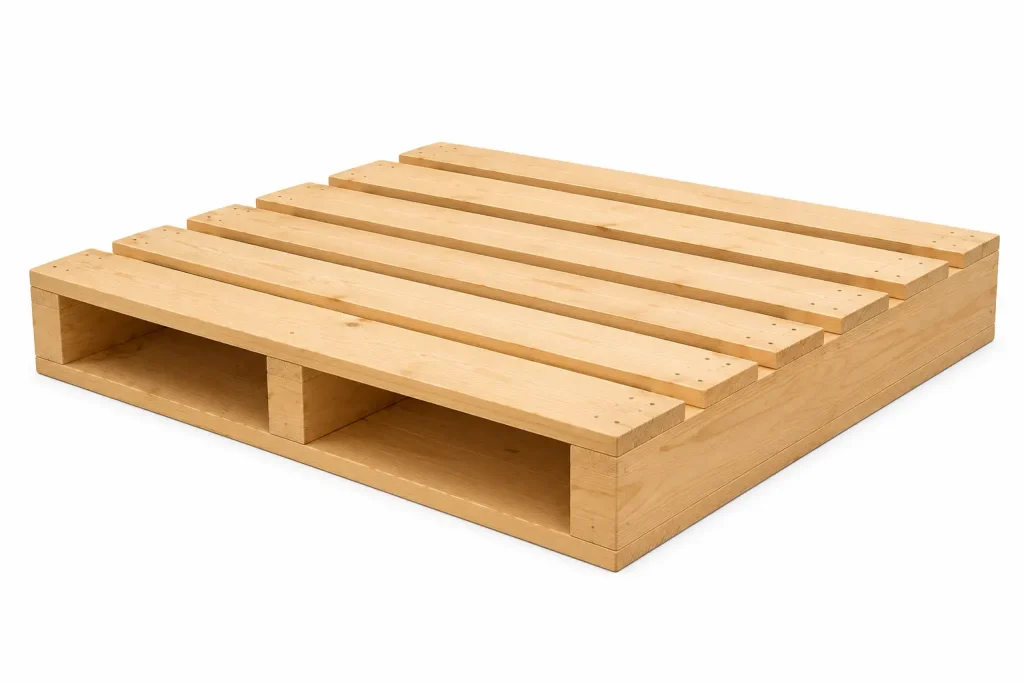
What Is a 2-Way Pallet?
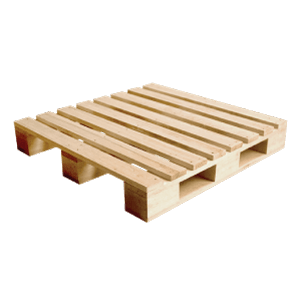
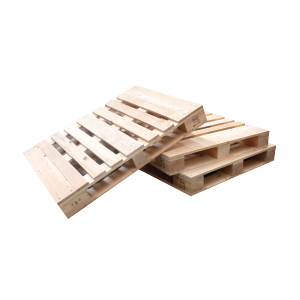
A 2-way pallet is a type of pallet designed so that a forklift can only enter from two opposite sides, namely the front and back. In this design, the sides of the pallet are usually closed by stringers, which means forklifts cannot access it from the left or right.
This construction gives 2-way pallets a simpler design compared to 4-way pallets. Although access is more limited, this type of pallet is still widely used because it can provide good stability for various storage and goods handling needs.
2-way pallets can be produced in various sizes and load capacities, from light industrial needs to heavy-duty applications that require high load capacity.
Characteristics of 2-Way Pallets
Before deciding which type of pallet to use, it is important to understand the basic characteristics of 2-way pallets.
Some of the main characteristics of 2-way pallets include:
- Forklift access from only two sides.
- Sides are closed using stringers.
- Simpler construction compared to 4-way pallets.
- Suitable for static storage and standard distribution.
- Can be made according to industrial needs.
- Available in standard and custom versions.
These characteristics make 2-way pallets a relevant choice for various industrial sectors to this day.
When Should You Use a 2-Way Pallet?
1. When Prioritizing Cost Efficiency
One of the main reasons companies choose 2-way pallets is cost. Compared to more complex designs, 2-way pallets generally have a simpler construction, making the production process more efficient.
This makes procurement costs more economical, especially for companies that need pallets in large quantities. Many companies compare wooden pallet prices from various specifications before deciding which type of pallet best suits their budget and operational needs.
For manufacturing, distribution, and warehousing industries that use hundreds to thousands of pallet units, the cost difference per unit can have a significant impact on the total investment.
2. When Goods Are Stored More Often Than Moved
Not all warehouses have high material handling activity. In some industries, goods are stored for a certain period before being used or distributed.
In these conditions, 2-way pallets are a very suitable choice. Limited forklift access from two sides is not a problem because the frequency of moving goods is relatively low.
Common examples of use include:
- Raw material warehouses.
- Finished goods warehouses.
- Reserve stock storage areas.
- Seasonal goods storage.
- Production component storage.
For these needs, 2-way pallets can provide good performance at a more efficient cost.
3. When You Need Pallets with Specific Sizes and Specifications
Every industry has different needs. Products with large dimensions, specific weights, or non-standard shapes often require specially designed pallets.
In these conditions, using custom wooden pallets can be the right solution. Pallets can be designed according to product size, load capacity, type of forklift used, and the storage system applied in the warehouse.
Because of their simple construction, 2-way pallet designs are relatively easy to modify to meet the specific needs of various industries. This makes them a popular choice for custom pallet needs.
4. When Used for Export Shipping
Many companies use 2-way pallets to support export activities because of their strong and economical design. However, the use of wooden pallets for export must comply with applicable international regulations.
For these needs, companies usually use ISPM 15 wooden pallets that have undergone Heat Treatment according to international standards. This process aims to ensure that the wood is free from harmful organisms that could spread between countries.
By using pallets that meet ISPM 15 standards, companies can reduce the risk of goods being rejected in the destination country while ensuring a smoother export process.
5. For Simple Storage Systems
Not all warehouses use modern racking systems or complex material handling equipment. Many companies still use floor stacking methods or store goods directly on the warehouse floor.
In these conditions, 2-way pallets can provide optimal functionality without requiring access flexibility from all four sides. Their simple construction is actually an advantage because they are easier to use and manage.
In addition, using 2-way pallets in simple storage systems can also help companies optimize operational costs without reducing the effectiveness of the goods storage process.
Indonesian Wooden Pallet Prices
Advantages of 2-Way Pallets
Strong and Stable Structure
2-way pallets are known for having a strong structure because they use a solid stringer design on the sides. This construction provides additional support for the load placed on the pallet.
Good stability makes 2-way pallets suitable for various storage and goods distribution needs with different load capacities.
More Economical
Another advantage of 2-way pallets is their relatively lower production cost compared to some other pallet designs.
For companies with large pallet requirements, this factor can provide a significant benefit. Therefore, many companies consider wooden pallet prices as one of the main factors before procurement.
Easy to Adjust to Your Needs
Every industry has different needs, from size and load capacity to the type of product being handled.
Through custom wooden pallet services, companies can obtain pallet specifications that suit their operational needs, making storage and distribution processes more efficient.
Suitable for Various Industries
2-way pallets are used by various industrial sectors, such as:
- Manufacturing.
- Warehousing.
- Agribusiness.
- Furniture.
- Food and beverage industry.
- Building materials industry.
- Export industry.
This flexibility makes 2-way pallets one of the most widely used pallet types to this day.
Limitations of 2-Way Pallets
Although they have many advantages, there are several things to consider before choosing 2-way pallets.
Because forklifts can only enter from two sides, operators must ensure that the pallet position matches the available access direction. This can affect efficiency in warehouses with very high material handling activity.
In addition, for systems that require high mobility and quick maneuvering, 4-way pallets usually offer greater flexibility.
2-Way Pallets vs 4-Way Pallets
| Factor | 2-Way Pallet | 4-Way Pallet |
| Forklift Access | 2 sides | 4 sides |
| Flexibility | Moderate | High |
| Production Cost | More Economical | Higher |
| Warehouse Mobility | Sufficient | Very Good |
| Static Storage | Very Suitable | Suitable |
| Customization | Easy | Easy |
The choice between these two types of pallets should be adjusted to the company’s operational needs, load capacity, and storage system used.
Conclusion
2-way pallets are a suitable solution for companies that prioritize cost efficiency, long-term storage needs, and operations with a relatively low frequency of goods movement.
In addition to being more economical, 2-way pallets can also be produced as custom wooden pallets or ISPM 15 wooden pallets to meet industrial and export needs. Before determining the right specifications, make sure to consider load capacity, storage system, and wooden pallet prices so that the investment provides maximum benefits for company operations.

