




Warehouse standard corrugated pallets are increasingly being used by modern warehouses that require efficient space utilization, fast material handling, and clean storage environments. As a result, corrugated pallets are becoming an important part of industrial warehousing systems.
Read the following guide to understand the function of warehouse standard corrugated pallets, their specifications, and how BMR supports more efficient warehouse operations.
The Role of Pallets in Modern Warehouse Systems
A warehouse serves as both a storage and distribution center for goods. Every day, large volumes of products are loaded, unloaded, moved, and stored. Therefore, material handling systems need to operate quickly and consistently.
Pallets serve as a fundamental component of modern warehouse operations. With pallets, goods can be moved using forklifts, stacked vertically, and organized efficiently within storage areas. Without pallets that meet the operational requirements of a warehouse, handling processes can become slower and the risk of product damage may increase.
This is where corrugated pallets are becoming an increasingly relevant option for many warehouse operations.
What Are Warehouse Standard Corrugated Pallets?
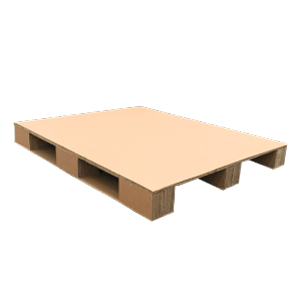
Warehouse standard corrugated pallets are pallets made from layered paper-based materials and designed to meet common warehouse requirements. Their dimensions, load capacity, and structural design can be adapted to the storage systems and material handling equipment used in a warehouse.
Standard corrugated pallets are generally designed to be compatible with warehouse racking systems and forklifts. The materials commonly used include corrugated paper and honeycomb paper, which provide a lightweight yet stable supporting structure.
With this design, warehouse standard corrugated pallets can perform many of the same material-handling functions traditionally associated with wooden pallets.
General Specifications of Standard Corrugated Pallets
Standard corrugated pallets are generally designed for light to medium loads. Depending on the pallet structure, materials, and leg design, load capacities can typically range from 500 to 1,000 kilograms.
One of their key characteristics is their lightweight construction. Corrugated pallets can be significantly lighter than conventional wooden pallets, helping simplify material handling and reduce the workload of handling equipment.
Their flat and precise surface also helps provide a stable base for cartons and packaged products during storage and transportation.
Compatibility with Warehouse Systems
Standard corrugated pallets can be designed for use with forklifts, hand pallet trucks, and warehouse storage systems. Consistent pallet dimensions help create a more organized and efficient storage layout.
For high-volume warehouses, standardized pallet dimensions can help streamline material flow, improve organization, and make inventory movement easier to control.
Read Also: Complete Wooden Pallet Solutions in Indonesia
Advantages of Corrugated Pallets for Warehouses
One of the main advantages of corrugated pallets is cleanliness. Unlike wooden pallets, corrugated pallets do not contain exposed nails and are designed to minimize debris and wood particles. This can help maintain a cleaner and safer warehouse environment, particularly for products that require controlled handling conditions.
Another advantage is that corrugated pallets do not require fumigation for their use as paper-based pallets. This can be beneficial for warehouses handling export products or goods with specific hygiene requirements.
From an operational perspective, their lightweight construction can also make product movement and loading and unloading processes easier.
Reducing Warehouse Operating Costs
The use of standard corrugated pallets can contribute to warehouse operating efficiency. Their lightweight construction can reduce the handling burden on forklifts and operators while supporting faster material movement.
Consistent pallet dimensions can also help optimize warehouse space utilization. When pallets have standardized dimensions, products can be arranged more systematically, allowing available storage space to be used more efficiently.
Over time, these operational improvements may contribute to lower warehouse operating costs. Therefore, corrugated pallets can serve not only as a material-handling solution but also as part of a broader warehouse efficiency strategy.
Corrugated Pallets for Various Industries
Standard corrugated pallets are suitable for a wide range of industries, including retail, e-commerce, FMCG, cosmetics, and electronics. Products packed in cartons can be arranged securely on a properly designed corrugated pallet.
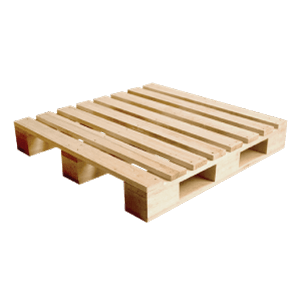
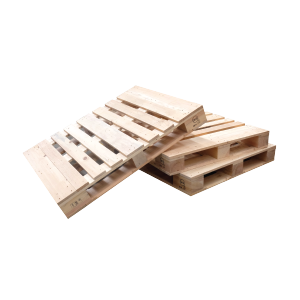
For extremely heavy loads, industrial machinery, or applications requiring very high load capacities, wooden or steel pallets may still be more appropriate. However, for many modern warehouse applications, corrugated pallets can provide an efficient and practical alternative.
The appropriate pallet should always be selected based on the product characteristics, load requirements, storage system, and material flow within the warehouse.
BMR’s Role in Supplying Standard Corrugated Pallets
As an industrial pallet solutions provider, PT. Bumi Mandiri Resources (BMR) supplies standard corrugated pallets designed to support modern warehouse operations. BMR focuses on structural stability, dimensional consistency, and product quality to meet the requirements of industrial customers.
BMR understands that warehouse operations require consistency. Therefore, pallets are manufactured under controlled quality processes to ensure consistent performance from one unit to another.
With corrugated pallet solutions from BMR, warehouses can improve material handling efficiency while maintaining a more organized and productive working environment.
Direct Impact on Warehouse Productivity
The use of corrugated pallets from BMR can help streamline material flow within warehouse operations. Their lightweight construction can make loading, unloading, and internal product movement easier to manage.
In addition, maintaining a clean warehouse environment can help reduce handling-related risks and support better packaging protection. These improvements can contribute to higher productivity and more efficient warehouse operations.
The Growing Trend of Corrugated Pallets as a Warehouse Standard
Modern warehouses are increasingly looking for logistics solutions that are lightweight, efficient, and environmentally responsible. As a result, corrugated pallets are gaining attention as an alternative pallet solution for various warehouse applications.
The continued growth of e-commerce and fast-moving distribution networks is increasing the demand for flexible and efficient material-handling solutions. Corrugated pallets can address many of these requirements through their lightweight construction, standardized dimensions, and paper-based materials.
As warehouse operations continue to evolve, the adoption of standard corrugated pallets is expected to grow across suitable applications.
Conclusion
Warehouse standard corrugated pallets provide an efficient, clean, and practical pallet solution for modern warehouse operations. Their lightweight construction and precise design can help simplify material handling, improve storage organization, and support operational efficiency.
With quality corrugated pallet solutions from PT. Bumi Mandiri Resources (BMR), warehouses can develop more organized and productive storage systems while preparing for the evolving demands of modern logistics.
Email: info@bmr-pallets.com
WhatsApp: +62 817-200-135

