




Corrugated pallets as an alternative to plastic pallets are increasingly being considered by companies looking to improve logistics efficiency while reducing operational costs and environmental impact. As a result, the shift from plastic pallets to paper-based pallet solutions is gaining attention across various industries.
Read the following guide to understand why corrugated pallets can serve as an alternative to plastic pallets and how BMR supports companies in making this transition.
Basic Comparison Between Corrugated and Plastic Pallets
Plastic pallets are known for their strength and durability. However, they can have a relatively high purchase cost and may require significant investment when used as part of a reusable pallet system. In closed-loop logistics, additional processes may also be required to collect, return, and manage pallets after delivery.
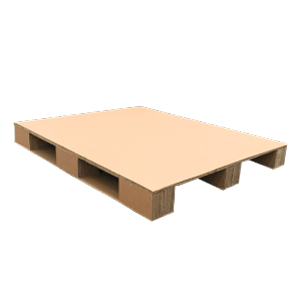
Corrugated pallets, on the other hand, are designed using specialized structures such as honeycomb paper and multilayer corrugated materials. These structures provide stability while keeping the pallet lightweight. In modern warehouse operations, the difference in pallet weight can have a significant impact on handling efficiency and transportation requirements.
For this reason, corrugated pallets are increasingly being considered as a functional alternative rather than simply a lower-cost option.
Advantages of Corrugated Pallets Over Plastic Pallets
One of the main advantages of corrugated pallets is their lightweight construction. Depending on the design and materials used, corrugated pallets can be significantly lighter than conventional plastic pallets. This can help reduce handling loads and make loading and unloading processes easier.
Corrugated pallets also offer greater flexibility in terms of design. Their dimensions, structure, and load capacity can be customized according to product requirements, while many plastic pallets are manufactured in standardized sizes. This flexibility can help warehouses optimize storage space and adapt pallet specifications to specific products.
From an environmental perspective, paper-based pallet materials can also offer recycling advantages. This makes corrugated pallets an option worth considering for companies implementing more sustainable logistics practices.
Operational Cost Efficiency
Plastic pallets generally require a higher initial investment. In addition, damaged plastic pallets may require replacement or specialized repair processes. Corrugated pallets can provide a lower initial investment while still delivering the required performance for many logistics applications.
For one-way distribution and e-commerce, corrugated pallets can be particularly efficient because they do not necessarily need to be returned to the sender. This can reduce reverse-logistics requirements and simplify pallet management.
As a result, corrugated pallets as an alternative to plastic pallets can contribute to lower overall logistics costs, depending on the distribution model, pallet specifications, and operating conditions.
Suitability of Corrugated Pallets for Modern Warehouses
Modern warehouses require speed, cleanliness, and flexibility. Corrugated pallets can support all three requirements. Their flat surfaces are designed for stable product placement, while their paper-based construction eliminates exposed nails and wood splinters commonly associated with traditional wooden pallets.
Industries such as cosmetics, pharmaceuticals, electronics, FMCG, retail, and e-commerce can benefit from these characteristics. Products can be stored and transported on a clean and lightweight pallet platform.
For extremely heavy loads, industrial machinery, or applications requiring very high load capacities, plastic, wooden, or steel pallets may still be more suitable. However, for many warehouse and distribution applications, properly engineered corrugated pallets can provide an effective alternative.
Read Also: Complete Wooden Pallet Solutions in Indonesia
Challenges of Using Plastic Pallets in Logistics Operations
Plastic pallets can present challenges in open-loop logistics systems. Loss, replacement costs, and the need to store empty pallets can become operational concerns, particularly when pallets are shipped to locations far from the point of origin.
Damaged plastic pallets can also become unsafe for handling and may be difficult or uneconomical to repair depending on the type of damage.
For companies operating large-scale distribution networks, these factors can encourage a reassessment of pallet systems and the exploration of more flexible alternatives.
Corrugated Pallets for One-Way Distribution
One-way distribution is increasingly common, particularly in e-commerce, retail, and export logistics. In this model, pallets may not return to the original sender after the goods reach their destination.
Using reusable plastic pallets in a one-way distribution model can create additional costs when the pallets need to be collected and returned. Corrugated pallets can be a practical alternative because they can remain at the destination and enter the local paper recycling stream after use, where suitable recycling facilities are available.
This approach can simplify pallet management, reduce reverse-logistics requirements, and improve overall distribution efficiency.
BMR’s Role in Providing High-Quality Corrugated Pallets
As an industrial pallet solutions provider, PT. Bumi Mandiri Resources (BMR) provides corrugated pallets as an efficient and precisely engineered alternative to plastic pallets. BMR develops pallet solutions based on factors such as load requirements, product dimensions, handling methods, and warehouse systems.
BMR understands that transitioning from plastic pallets to corrugated pallets requires reliable performance. Therefore, each pallet is produced under controlled quality standards to support safe and consistent daily operations.
With the right structural design, BMR corrugated pallets can replace plastic pallets in a wide range of logistics applications where their specifications are suitable.
Direct Impact on Productivity
Using corrugated pallets from BMR can help simplify material handling and improve distribution efficiency. Their lightweight construction can make pallets easier to handle while helping warehouses maintain a more organized working environment.
In addition, adopting paper-based pallet solutions can support a company’s sustainability initiatives and demonstrate its commitment to more responsible logistics practices.
The Growing Trend of Replacing Plastic Pallets in Industry
The global logistics industry is increasingly exploring solutions that are lightweight, efficient, and more sustainable. As companies evaluate their supply chains, pallet selection has become one of the areas where operational efficiency and environmental considerations can be addressed together.
In Indonesia, this trend is supported by the continued growth of e-commerce, modern retail, and fast-moving distribution networks. Corrugated pallets are therefore gaining attention as an alternative to plastic pallets for suitable logistics applications.
The adoption of corrugated pallets is likely to continue as companies seek pallet solutions that balance cost, handling efficiency, product protection, and sustainability.
Conclusion
Corrugated pallets as an alternative to plastic pallets offer a lightweight, flexible, and potentially more efficient solution for various warehouse and distribution applications. With the right design and specifications, corrugated pallets can replace plastic pallets in many logistics operations while simplifying handling and pallet management.
With high-quality corrugated pallet solutions from PT. Bumi Mandiri Resources (BMR), companies can explore a more efficient and sustainable pallet system without compromising the operational requirements of their logistics processes.
Email: info@bmr-pallets.com
WhatsApp: +62 817-200-135

