




A 40-foot container is one of the most widely used types of containers for export activities because it can transport large quantities of goods with more efficient shipping costs. Many manufacturing companies, logistics companies, and exporters choose 40-foot containers to ship products to various countries because they have a larger capacity than 20-foot containers. Pasted markdown
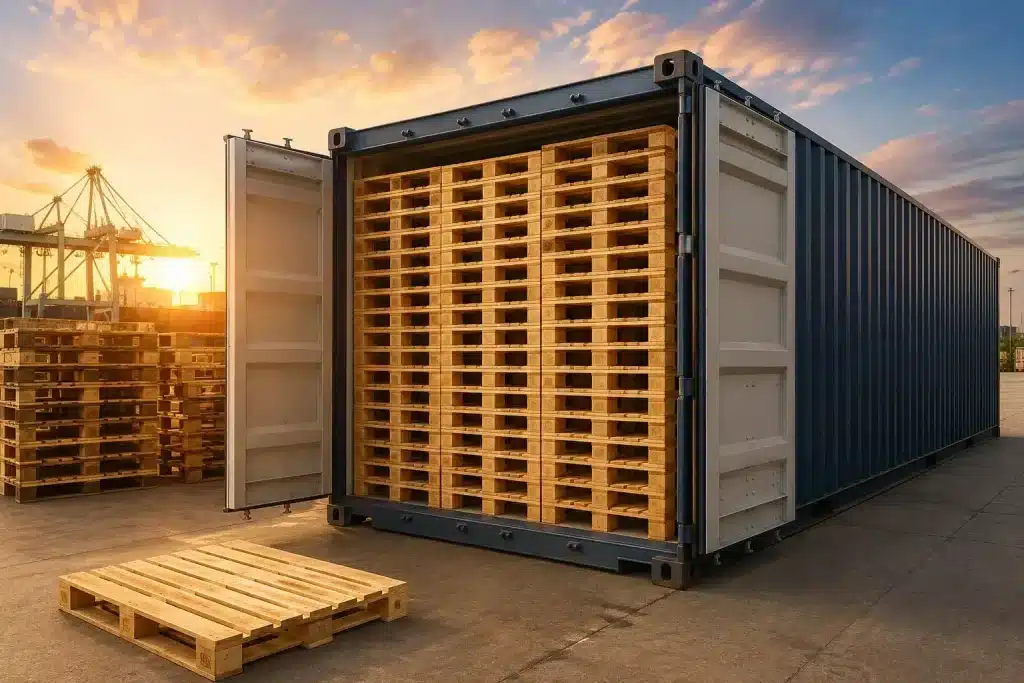
One of the questions frequently asked before the stuffing process is how many wooden pallets can be loaded into a 40-foot container. The answer is not always the same because it is influenced by pallet size, product dimensions, load weight, and the method of arranging goods inside the container. By understanding these factors, companies can optimize shipping capacity while reducing logistics costs.
Standard Size of a 40-Foot Container
A 40-foot container has internal dimensions of approximately 12.03 meters long, 2.35 meters wide, and 2.39 meters high. These dimensions provide enough space to transport various types of commodities, ranging from food and beverages, pharmaceuticals, electronics, chemicals, to industrial machinery.
Although it has a large capacity, the space inside the container must be used optimally. Choosing the right pallet size will help reduce empty space so that more products can be shipped in a single shipment. This certainly has an impact on the efficiency of logistics and distribution costs.
Factors That Determine the Number of Pallets
The number of pallets that can be loaded into a 40-foot container does not only depend on the container size. Pallet dimensions, product size, load height, and load capacity are the main factors that determine the final number of pallets that can be loaded.
In addition, the stuffing method used also affects space efficiency. Proper pallet arrangement will help maximize container capacity without compromising product safety during shipping. Therefore, planning before stuffing is an important step for every exporting company.
Estimated Number of Pallets by Size
Each pallet size results in a different loading capacity. Pallets with smaller dimensions usually allow for a larger quantity, while larger pallets require more space inside the container.
The following is an estimated number of pallets that can be loaded into a 40-foot container based on sizes commonly used in the industry.
| Pallet Size | Dimensions | Estimated Quantity |
|---|---|---|
| 120 × 100 cm | 1200 × 1000 mm | 20–21 pallets |
| 120 × 80 cm (Euro Pallet) | 1200 × 800 mm | 24–25 pallets |
| 110 × 110 cm | 1100 × 1100 mm | 20 pallets |
| 120 × 120 cm | 1200 × 1200 mm | 18–20 pallets |
| 114 × 114 cm | 1140 × 1140 mm | 18–20 pallets |
| 103 × 123 cm | 1030 × 1230 mm | Depends on the arrangement pattern |
The data above are estimates commonly used in the logistics industry. The actual number may vary depending on product size, load weight, and the space required during the stuffing process.
Why Can the Number of Pallets Vary?
Even when using the same pallet size, the number of pallets that can be loaded is not always identical. This occurs because each product has different dimensions, shapes, and stacking characteristics.
For example, products that exceed the standard height or have irregular shapes will require additional space. In addition, some companies also leave certain spaces to facilitate the loading and unloading process or provide additional protection during transportation.
How to Optimize the Capacity of a 40-Foot Container
Optimizing container capacity does not mean filling all available space without calculation. Proper arrangement must still consider load distribution so that the products remain safe during transportation.
Choosing the right pallet size is one of the most effective ways to improve shipping efficiency. With the appropriate pallet size, empty space inside the container can be minimized so that loading capacity becomes more optimal.
Use the Right Pallet Size
Not all types of products are suitable for the same pallet size. Products with large dimensions usually require wider pallets, while products with smaller packaging can use more efficient sizes so that more goods can be loaded.
Therefore, companies need to adjust the pallet size to the characteristics of the products being shipped. This step not only helps increase shipping capacity but also maintains product stability during transportation.
Consider the Load Weight
In addition to considering the number of pallets, companies must also ensure that the total load weight does not exceed the maximum capacity of the 40-foot container. Excessive loads can affect shipping safety and may also violate the requirements of the shipping company.
Choosing a pallet construction that matches the product’s load capacity is also very important. Pallets that are too light are at risk of damage, while pallets with the right specifications will provide better protection during distribution.
Use ISPM 15 Wooden Pallets for Export
If the shipment is made overseas, the use of ISPM 15 wooden pallets is one of the requirements that must be considered. Many export destination countries only accept wooden packaging that has undergone Heat Treatment according to ISPM 15 standards.
Using pallets that meet international standards helps reduce the risk of goods being rejected during quarantine inspections in the destination country. In addition, companies can have greater assurance that the export process can run more smoothly without administrative issues related to wooden packaging.
Supporting the Container Stuffing Process
Pallets with precise dimensions make the stuffing process easier because goods can be arranged more neatly and stably. Proper arrangement helps reduce empty space while maintaining load balance during shipping.
In addition to improving space efficiency, using the right pallets also speeds up loading and unloading processes using forklifts and other material handling equipment.
Suitable for Various Export Commodities
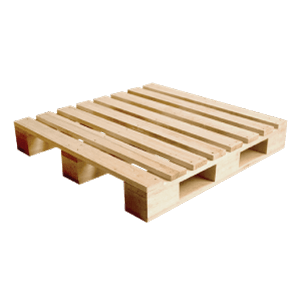
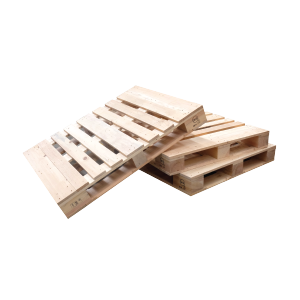
ISPM 15 wooden pallets are widely used to ship various types of products such as food and beverages, pharmaceuticals, electronics, chemical products, automotive components, industrial machinery, and various other export commodities.
With specifications that can be customized, companies can choose the type of pallet that best suits the characteristics of the product and the export destination country.
Why Choose BMR?
BMR is an experienced wooden pallet manufacturer serving industrial and export needs in Indonesia. We provide various pallet sizes, from standard to custom sizes, which can be adjusted to the operational needs of each company.
Supported by ISPM 15 Heat Treatment facilities, large production capacity, and consistent quality control processes, BMR is ready to help companies get the right pallet solutions to maximize 40-foot container capacity while supporting a smooth export process.
Specification Consultation Based on Your Needs
Every company has different logistics needs. The BMR team is ready to help determine the size, wood type, load capacity, and pallet specifications that match the products and shipping methods used.
Through this consultation, companies can get more efficient pallet recommendations so that distribution and export processes can run more optimally.
Ready to Meet Industrial and Export Needs
BMR serves wooden pallet needs for various industrial sectors, from manufacturing, food and beverages, pharmaceuticals, electronics, chemical products, to logistics. We also provide ISPM 15 wooden pallets ready for shipments to various countries.
With experience serving various industrial projects, BMR is committed to providing quality products that support the smooth operation of customers.
FAQ
How many 120×100 pallets fit in a 40-foot container?
In general, a 40-foot container can hold around 20–21 pallets measuring 120 × 100 cm, depending on product dimensions and the arrangement pattern.
How many Euro Pallets fit in a 40-foot container?
For 120 × 80 cm (Euro Pallet), the capacity is around 24–25 pallets, making it one of the most efficient sizes for utilizing container space.
Can all pallet sizes be used in a 40-foot container?
Yes. However, the number of pallets that can be loaded will vary depending on pallet dimensions, product size, and the stuffing method used.
Does BMR provide ISPM 15 wooden pallets for export?
Yes. BMR provides various sizes of ISPM 15 wooden pallets that have undergone Heat Treatment and are ready for export to various countries.
Consult Your Wooden Pallet Needs
Choosing the right pallet size is an important step to maximize 40-foot container capacity while improving logistics cost efficiency. With the right specifications, the stuffing process becomes more optimal, product safety is better maintained, and shipping can run more smoothly.
BMR provides various sizes of wooden pallets, including ISPM 15 wooden pallets for export needs. Our team is ready to help you determine the size, load capacity, wood type, and pallet specifications that best match your product characteristics and shipping destination.
Contact the BMR team now to get a free consultation and the best offer according to your company’s industrial or export needs.
📅 Last updated:

